
Planning a home renovation is exciting, but one of the first questions most homeowners ask is: How long will it take?
The answer depends on the size of the property, the scope of work, planning requirements, and the level of bespoke design involved. While every project is unique, understanding the typical stages of a renovation can help you set realistic expectations and avoid unnecessary delays.
At ARMA Interiors, we guide clients through every stage of the renovation journey, ensuring projects are carefully planned, expertly managed, and delivered to the highest standard.

Average Home Renovation Timelines
Below is a general guide to how long different renovation projects typically take.
| Project Type | Typical Duration |
| Single Room Refresh | 2–4 weeks |
| Kitchen Renovation | 6–10 weeks |
| Bathroom Renovation | 4–8 weeks |
| Ground Floor Renovation | 8–12 weeks |
| Full House Renovation | 4–8 months |
| Luxury Home Renovation with Structural Changes | 8–12+ months |
These timelines can vary depending on factors such as planning permissions, bespoke joinery, structural alterations, and product lead times.
Stage 1: Initial Consultation (1–2 Weeks)
Every successful renovation begins with careful planning.
During the initial consultation, your interior designer will discuss your vision, lifestyle, design preferences, budget, and long-term goals for the property. Measurements are taken, existing layouts are reviewed, and the project brief is developed.
This stage lays the foundation for the entire renovation.
Stage 2: Design Development (2–6 Weeks)
Once the brief has been agreed, the design process begins.
This may include:
- Space planning
- Furniture layouts
- Mood boards
- Colour palettes
- Material selections
- Lighting concepts
- Joinery designs
- Kitchen and bathroom layouts
- 3D visualisations
Taking time during this phase helps prevent costly changes later in the project.
Stage 3: Technical Drawings & Planning (2–8 Weeks)
If structural changes are involved, technical drawings and approvals may be required.
Depending on the project, this stage can include:
- Building Regulations drawings
- Structural engineer input
- Planning permission applications
- Party wall agreements
- Contractor quotations
Some projects can move straight into construction, while others may require additional approvals before work begins.

Stage 4: Ordering Materials (2–12 Weeks)
One of the biggest causes of renovation delays is waiting for materials.
Items such as bespoke kitchens, stone worktops, custom furniture, specialist lighting, and handmade tiles often have longer lead times than standard products.
Ordering key materials early helps keep the project on schedule.

Stage 5: Construction & Installation
This is where the transformation begins.
Depending on the project, construction may include:
- Demolition
- Structural alterations
- Plumbing
- Electrical work
- Flooring installation
- Plastering
- Decorating
- Kitchen installation
- Bathroom installation
- Bespoke joinery
- Final styling
Each trade follows a planned sequence to ensure work is completed efficiently and to a
high standard.
Stage 6: Finishing Touches (1–3 Weeks)
As construction comes to an end, the focus shifts to the details that complete the home.
This may include:
- Lighting installation
- Furniture placement
- Window treatments
- Artwork
- Decorative accessories
- Final snagging
- Professional photography
These finishing touches bring the design together and create a cohesive, polished interior.
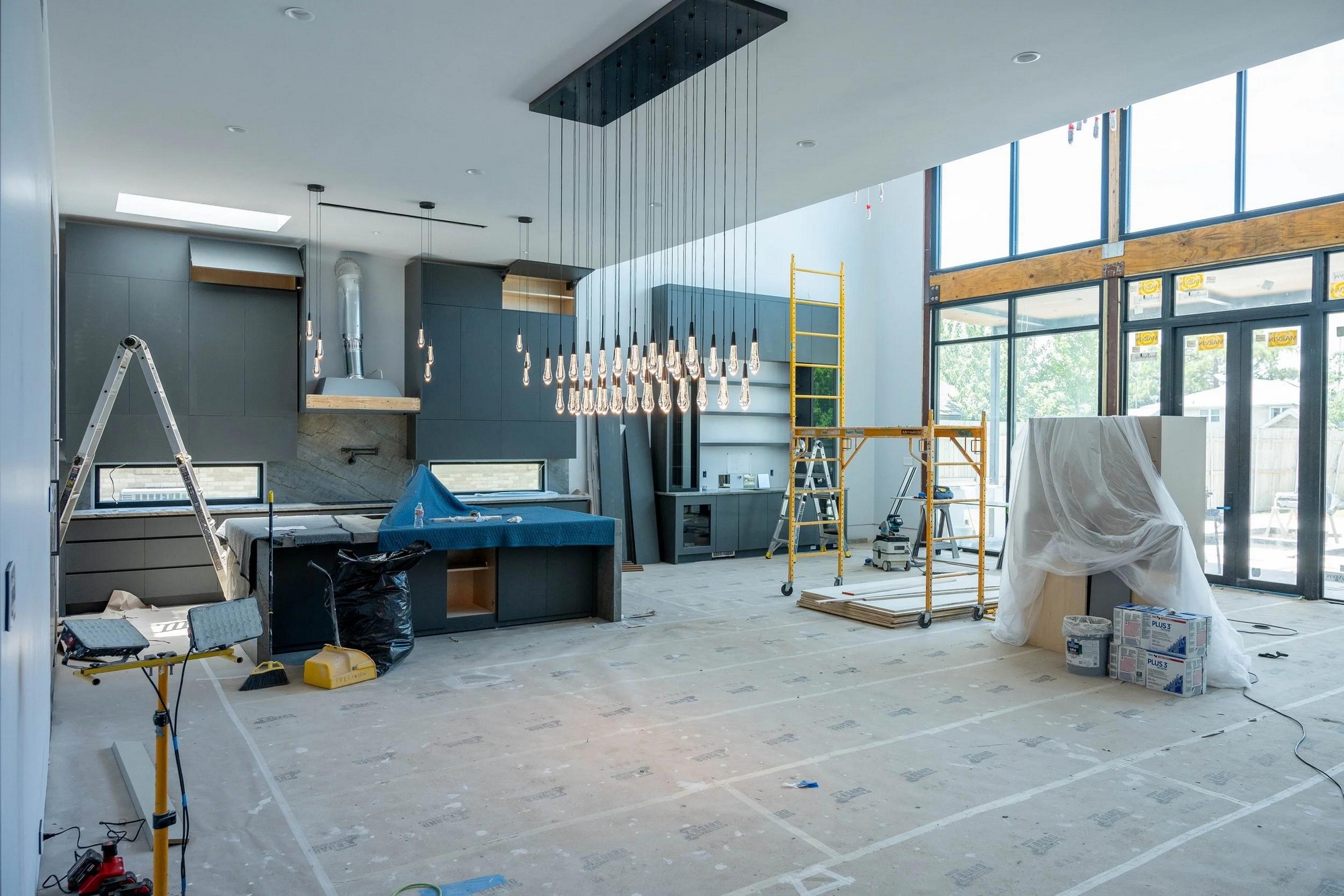
What Can Delay a Home Renovation?
Even the best-planned projects can experience delays.
Common reasons include:
- Planning permission requirements
- Unexpected structural issues
- Changes requested during construction
- Material shortages
- Bespoke manufacturing lead times
- Weather (for extension projects)
- Availability of specialist contractors
Working with an experienced interior design and project management team helps minimise these risks through careful planning and clear communication.
How to Keep Your Renovation on Schedule
Homeowners can help their project run smoothly by:
- Making design decisions early
- Confirming budgets before work begins
- Ordering materials in advance
- Avoiding major design changes once construction starts
- Choosing experienced professionals who coordinate every stage of the project
Good planning often saves both time and money.
Why Professional Project Management Matters
A successful renovation is about more than beautiful design. It also requires careful coordination between designers, contractors, suppliers, and specialist trades.
Professional project management ensures that each stage is completed in the correct order, reducing delays, controlling costs, and maintaining quality throughout the build.
At ARMA Interiors, we oversee every aspect of the process—from the initial concept through to the final styling—giving homeowners confidence that their renovation is progressing smoothly
Ready to Start Your Home Renovation?
Whether you’re planning a single-room transformation or a complete home renovation, understanding the timeline is the first step towards a successful project.
ARMA Interiors creates thoughtfully designed spaces that balance luxury, functionality, and timeless style. From concept development and space planning to bespoke interiors and project management, our team is committed to delivering exceptional results tailored to your lifestyle.
Thinking about renovating your home? Contact ARMA Interiors to arrange a consultation and discover how we can help bring your vision to life.